

What is Polyurethane Foam Insulation?

Polyurethane foam insulation is a high-performance insulation material used to improve energy efficiency, control indoor temperatures, and reduce energy costs in residential, commercial, and industrial buildings. Made from a mixture of polyols and isocyanates, polyurethane foam is applied as a liquid that expands to fill spaces, gaps, and hard-to-reach areas, creating a seamless, airtight barrier. This insulation type is known for its exceptional thermal resistance, durability, and versatility, making it ideal for diverse applications, including walls, attics, crawl spaces, and even refrigerated structures.


Types of Polyurethane Foam Insulation


Polyurethane foam insulation is available in two main types:

Open-Cell Polyurethane Foam

Open-cell foam is lighter and less dense, with an R-value (a measure of thermal resistance) typically around 3.5 per inch. This foam is permeable to water vapor, making it ideal for areas where breathability is important, like attics and walls. Open-cell foam is also highly effective for soundproofing due to its cellular structure, which can trap and dampen noise.

Closed-Cell Polyurethane Foam

Closed-cell foam is denser and has a higher R-value, around 6 to 7 per inch, making it one of the most effective insulators available. This foam type is water-resistant and more rigid, providing both thermal insulation and structural reinforcement. Closed-cell foam is suitable for environments exposed to high moisture or requiring additional strength, such as basements, foundations, and external walls.


How Polyurethane Foam Insulation Works


Polyurethane foam insulation works by expanding and filling gaps and cavities when applied, creating an airtight seal that prevents air infiltration and heat loss. It acts as a thermal barrier, effectively reducing the transfer of heat between indoor and outdoor environments. Additionally, its air-sealing qualities minimize drafts and help maintain consistent indoor temperatures, reducing the need for excessive heating or cooling.

This insulation method can reduce energy costs significantly, as it stops up to 30% of the energy loss typically associated with poor insulation. With the closed-cell variant, polyurethane foam also enhances structural integrity, which can be beneficial for buildings in high-wind or earthquake-prone areas.


Key Benefits of Polyurethane Foam Insulation


Polyurethane foam insulation offers several advantages that make it a popular choice for property owners and builders:

Exceptional Thermal Resistance: High R-value per inch means better thermal resistance, leading to greater energy savings.

Air and Moisture Barrier: Prevents air leakage and moisture buildup, reducing mold risk and improving indoor air quality.

Increased Structural Support: Closed-cell foam’s rigidity can reinforce walls, floors, and ceilings.

Soundproofing Capabilities: Particularly with open-cell foam, polyurethane insulation provides effective sound dampening, ideal for urban or high-noise areas.

Durability and Longevity: Polyurethane foam insulation is highly resistant to degradation, retaining its insulating properties for decades when properly installed.

Applications of Polyurethane Foam Insulation

Polyurethane foam insulation is used across various applications to suit different needs:

  • Residential Buildings: Ideal for attics, walls, and floors, reducing energy bills while enhancing comfort.
  • Commercial Buildings: Used in office spaces, retail establishments, and warehouses to improve energy efficiency and occupant comfort.
  • Industrial Applications: Effective in environments requiring precise temperature control, such as food storage or chemical facilities.
  • Agricultural Use: Protects barns, greenhouses, and storage areas, providing stable temperatures for livestock and crops.
  • Refrigerated Structures: Closed-cell foam’s high R-value makes it suitable for refrigerated storage, keeping spaces efficiently insulated even at low temperatures.


Why Choose Polyurethane Foam Insulation?


Polyurethane foam insulation has become a preferred choice for many due to its unmatched performance, versatility, and durability. It helps property owners reduce energy usage and associated costs, while its water resistance and structural benefits make it suitable for challenging environments. Additionally, its ability to provide air-sealing benefits and control indoor temperature helps create healthier, more comfortable living and working spaces. As environmental consciousness grows, polyurethane foam is also being recognized for its contributions to green building standards and sustainable construction.


Frequently Asked Questions


1. How long does polyurethane foam insulation last?

Polyurethane foam insulation can last up to 30 years or more, depending on the environment and quality of installation.

2. Is polyurethane foam insulation safe?

Yes, it’s safe when installed by professionals, as they ensure proper ventilation and application techniques to prevent off-gassing.

3. How does polyurethane foam compare to traditional insulation materials?

Polyurethane foam generally offers higher R-values and better air-sealing, making it more effective for energy efficiency.

4. Can polyurethane foam insulation be used outdoors?

Closed-cell foam is suitable for outdoor use as it resists water and adds strength, making it ideal for external walls and foundations.

5. Does polyurethane foam insulation prevent mold growth?

Yes, its moisture-resistant properties reduce the likelihood of mold, especially in damp areas like basements.

6. Is polyurethane foam insulation eco-friendly?

Polyurethane foam can contribute to eco-friendly building practices by reducing energy needs and helping buildings meet green standards.

Polyurethane foam insulation offers significant benefits, from increased energy efficiency to structural reinforcement, making it a smart choice for a wide range of applications. By understanding the properties and uses of both open- and closed-cell polyurethane foams, you can make an informed decision to optimize your building’s performance and comfort.

Share this article
by Mick Foy 7 May 2026
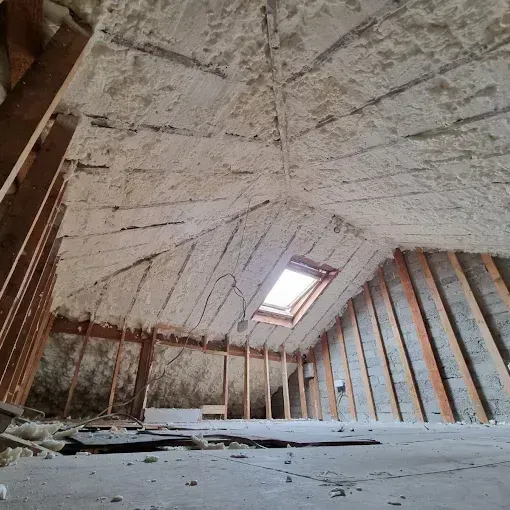
The Irish Climate and Rising Energy Costs In Ireland’s damp and unpredictable climate, a poorly insulated attic can lead to major heat loss, higher energy bills, draughts and condensation problems. That’s why proper attic insulation is essential — but it has to be installed correctly. How Open Cell Spray Foam Works Open cell spray foam creates a seamless layer of insulation that expands into gaps and hard-to-reach areas, helping to reduce heat loss far more effectively than traditional insulation. At Spray Foam Insulations , we use NSAI-certified open cell spray foam, specifically suited to Irish homes and weather conditions. Its breathable structure allows moisture vapour to pass through, helping to maintain a healthy roof space while improving thermal performance. Ventilation Matters Just as Much In fact, ventilation is critical! Roof timbers need airflow to stay dry and protected. Without proper ventilation channels, moisture can become trapped behind insulation, leading to condensation, mould and timber rot over time. That’s why we install ventilation cards to maintain airflow from the eaves to the ridge. This ensures your attic remains properly ventilated while your insulation performs efficiently. Why Professional Installation Is Essential Correct spray foam installation requires experience and attention to detail. Our trained installers ensure every attic is insulated safely and ventilated properly — protecting both your comfort and your roof structure for the long term. This avoids any potential issues with Insurers or Banks as a result of poor installation carried out by untrained operators. The Benefits Lower heating bills A warmer, more comfortable home Reduced draughts and condensation Protection for roof timbers Improved energy efficiency Thinking About Attic Insulation? At Spray Foam Insulations , we combine NSAI-certified materials with expert installation to deliver insulation systems designed for Irish homes. Contact us today for a free consultation survey.
20 January 2025
What Is Rockwool Insulation?  Rockwool insulation, also known as mineral wool or stone wool, is a highly effective and versatile insulation material widely used in Ireland for residential and commercial properties. It is manufactured by heating natural stones like basalt at extreme temperatures until molten, which is then spun into fibres resembling wool. This process creates a dense, durable material that offers excellent thermal, acoustic, and fire-resistant properties. Rockwool is available in various forms, such as rolls, batts, and rigid boards, making it suitable for walls, floors, ceilings, and cavity insulation. It’s particularly favoured for its sustainable properties, as it is often made from up to 70% recycled materials. Why Choose Rockwool Insulation for Your Irish Home? Superior Thermal Performance Rockwool insulation boasts an impressive R-value, meaning it offers superior thermal resistance compared to other insulation types like fibreglass. This high R-value helps retain heat during colder months and keeps homes cool during summer, making it ideal for Ireland’s fluctuating climate. Acoustic Soundproofing The density of Rockwool makes it an excellent soundproofing material, reducing noise between rooms or from external sources. This makes it a popular choice for urban homes or properties near busy roads. Benefits of Rockwool Insulation Fire Resistance: Can withstand temperatures up to 1,400°F (760°C). Moisture Resistant: Does not absorb water, preventing mould growth. Eco-Friendly: Made from recycled materials and is sustainable. Key Applications of Rockwool Insulation Loft and Attic Insulation Rockwool insulation is perfect for attics and lofts, where it can be installed between rafters to improve thermal efficiency. Its ability to resist moisture ensures that it performs well in areas prone to condensation. Wall Insulation Rockwool batts and boards are ideal for cavity and solid wall insulation. The material’s fire resistance and durability make it a reliable choice for new builds and retrofits. Additional Benefits of Rockwool Durability: Retains its shape and performance for decades. Ease of Installation: Simple to cut and install with minimal irritation compared to fibreglass. Improved Energy Efficiency: Reduces heating costs, contributing to lower energy bills. Why Rockwool Insulation is a Smart Choice in Ireland Ireland’s diverse climate calls for insulation materials that are robust, versatile, and sustainable. Rockwool’s ability to provide excellent thermal and acoustic performance, coupled with its eco-friendly properties, makes it a preferred choice for many Irish homeowners and builders. Its resistance to fire, moisture, and mould adds further value, ensuring your property remains safe and energy-efficient for years to come. For more information on how Rockwool can transform your home, visit our Contact Page .
A row of houses are lined up next to a graph with an arrow pointing up.
12 November 2024
Discover how spray foam insulation can enhance your home’s value, improve energy efficiency, and appeal to potential buyers in Ireland’s property market.  In Ireland’s competitive property market, homeowners and landlords are always looking for ways to increase the value of their properties while making them more comfortable and energy-efficient. One of the most cost-effective and high-impact ways to achieve this is by installing spray foam insulation. Not only does spray foam improve the energy efficiency of your home, but it can also make your property more attractive to potential buyers, increase its overall value, and lead to long-term savings on utility bills. In this blog, we’ll explore how spray foam insulation can boost your property’s market value and why it’s a smart investment for homeowners in Ireland. What is Spray Foam Insulation? Spray foam insulation is a modern solution for improving the thermal efficiency of a property. It is made from two components—polyurethane foam and isocyanate—that react when mixed, forming a highly effective insulating material. This foam expands upon application, filling gaps, cracks, and cavities, creating an airtight seal that prevents heat from escaping in winter and cool air from escaping in summer. Spray foam insulation is particularly effective in hard-to-reach areas, such as attics, walls, floors, and even basements, where traditional insulation materials may not provide the same level of coverage or performance. How Spray Foam Insulation Increases Property Value Enhanced Energy Efficiency : In today’s market, energy efficiency is one of the key considerations for homebuyers. With energy bills continually on the rise, buyers are looking for homes that offer long-term savings. Spray foam insulation significantly improves a property’s energy efficiency by reducing heat loss and preventing drafts, leading to lower heating and cooling costs. Homes that are well-insulated with spray foam are more attractive to potential buyers who are looking for a sustainable, cost-effective home. The energy savings that come with spray foam can be a major selling point, especially as the Irish government continues to encourage energy-efficient homes. Better Thermal Comfort : Spray foam insulation helps to maintain consistent indoor temperatures throughout the year. In Ireland’s climate, where temperatures can vary widely, having a home that stays warm in winter and cool in summer adds to the comfort and livability of the space. This added comfort is a major selling point for prospective buyers, especially those with young children or elderly family members. The even temperature distribution helps to eliminate cold spots and dampness, which can be a concern in older homes. This means your property will not only be more comfortable for you while you live there but will also appeal to buyers seeking a comfortable living environment. Increased Property Appeal : Homes with spray foam insulation are often seen as modern and well-maintained. Buyers are increasingly aware of the benefits of energy-efficient homes, so properties that are already insulated with high-quality materials like spray foam tend to stand out in the market. Installing spray foam insulation can set your property apart from others, giving you an edge in a competitive market. Whether you’re selling a family home or a rental property, energy efficiency is a key factor that many buyers are willing to pay a premium for. Improved Soundproofing : Another benefit of spray foam insulation is its ability to improve soundproofing. Spray foam’s dense, airtight structure helps reduce noise transmission between rooms and from outside the property. This makes the home quieter and more peaceful, which is especially desirable in noisy urban areas or for properties near busy roads. A quieter home is always a bonus for buyers, as it contributes to a more comfortable living environment. Spray foam insulation can help create a space that feels more private and secluded, adding to its overall appeal. Long-Term Durability : Spray foam insulation is known for its long-lasting performance. Unlike traditional insulation materials, which may settle or deteriorate over time, spray foam remains intact and effective for decades. It won’t sag, shrink, or lose its insulating properties, providing lasting benefits to both homeowners and future buyers. Homes with long-term, low-maintenance features like spray foam insulation are more attractive to potential buyers who prefer properties that won’t require costly updates or repairs in the near future. The Return on Investment (ROI) of Spray Foam Insulation When you invest in spray foam insulation, you’re not just improving your home’s comfort and energy efficiency—you’re also making a smart financial decision. The cost of spray foam insulation can be recouped over time through lower energy bills, but it also increases the resale value of your property. Homes with energy-efficient features like spray foam insulation tend to sell faster and for a higher price than those without. In fact, a study by the U.S. Department of Energy found that homebuyers are often willing to pay more for homes with energy-efficient features, with some buyers willing to pay an additional 2-3% more for a property with superior insulation. In Ireland, where energy efficiency is becoming increasingly important to both homeowners and buyers, investing in spray foam insulation is a proactive way to increase your property’s value. Whether you're looking to sell now or in the future, spray foam insulation will continue to offer value long after it’s installed. Environmental Benefits That Appeal to Buyers Another growing trend in property sales is the focus on sustainability and environmental impact. Buyers are becoming more conscious of the carbon footprint of their homes, and many are prioritising energy-efficient properties that contribute to a greener future. Spray foam insulation plays a key role in reducing your home’s carbon emissions by cutting down on the energy required to heat and cool the property. By upgrading your home with spray foam insulation, you’re not only increasing its value and energy efficiency—you’re also contributing to a more sustainable future, which may appeal to eco-conscious buyers. Conclusion: Make the Smart Investment with Spray Foam Insulation Spray foam insulation offers a range of benefits that can increase your property value, from improving energy efficiency and reducing heating costs to enhancing comfort and soundproofing. Whether you’re planning to sell your home or want to make your current living space more comfortable, spray foam insulation is a smart investment that delivers long-term value. By installing spray foam insulation, you’re not only creating a more energy-efficient and comfortable home, but you’re also positioning your property as an attractive and modern choice for potential buyers in Ireland’s competitive property market. Take advantage of the benefits of spray foam insulation and enjoy a higher property value, reduced utility bills, and a more sustainable living space for years to come.
More posts